
ABOUT THE LAKE GEMS COLLECTION
Koi carp are not only beautiful and fascinating creatures, but also beings deeply rooted in Japanese culture and history. These colourful carp are not only an aesthetic addition to garden ponds but also symbols with rich mythological and cultural significance.
The word koi 鯉 simply means carp in Japanese. The fish we call koi in Europe are called nishikigoi 錦鯉 in Japan, which can be literally translated as brocaded carp. In Japanese, "koi" is a homophone for a word meaning affection, fondness, or love, which is why koi are a symbol of love and friendship in Japan.
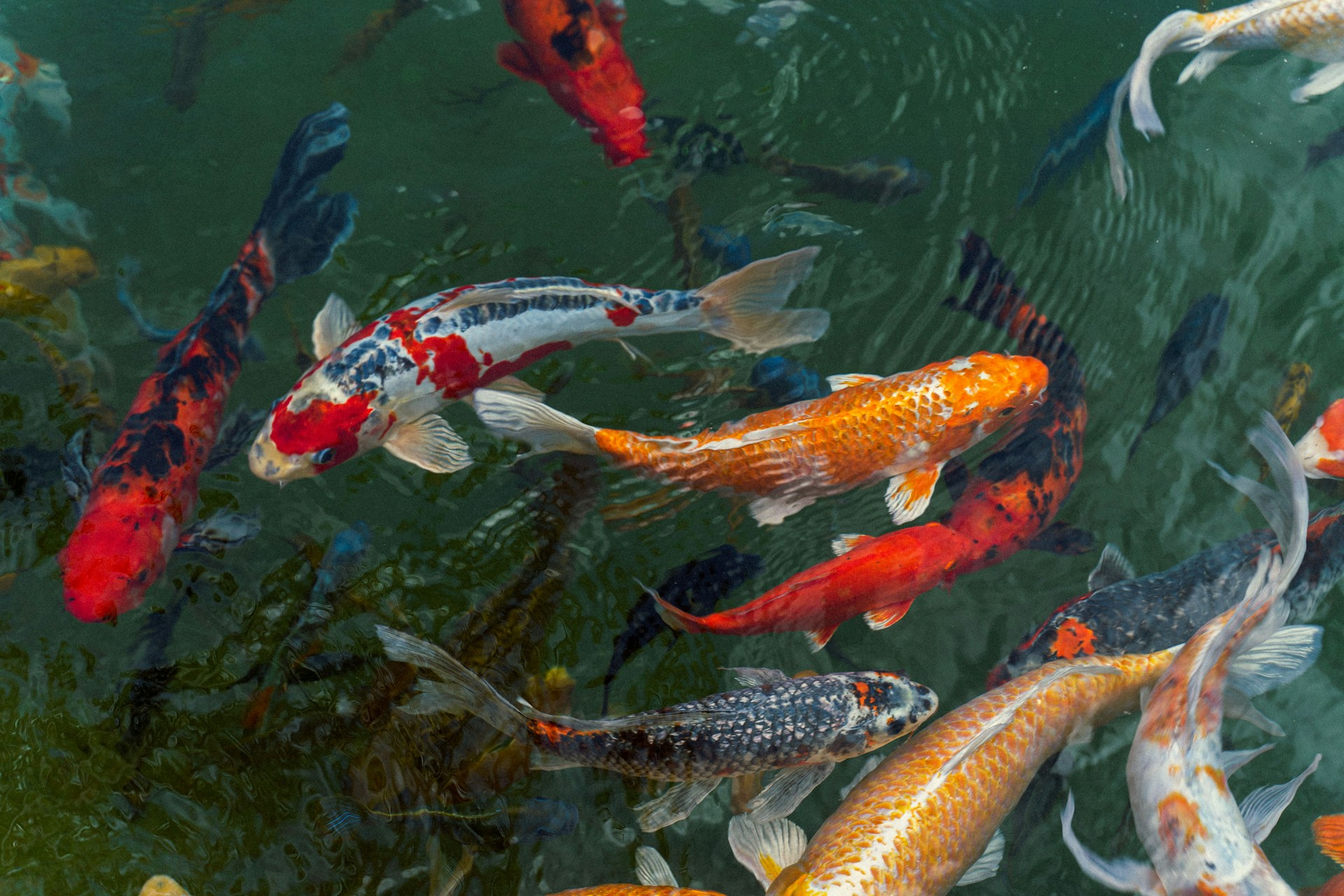
Alejandro Aro on Unsplash
About breeding koi carp
Koi carp originated in China, where they may have been bred as far back as two millennia ago. They arrived in Japan during the Tang dynasty (618–907 AD), when trade and cultural exchanges between the two countries were at their peak. Originally, koi were bred for their meat, but during the Edo period (1603-1868), Japanese farmers began to pay more attention to their colour mutations.
With proper care, koi carp can live up to 70 years. In the Czech Republic, they began to be bred in the 1980s, and the prices of quality carp can reach tens of thousands of Czech crowns.
Origin and varieties
The first systematic breeding of coloured koi began in the Niigata region, where local farmers discovered that by crossing differently coloured carp, they could achieve beautiful results. These colour variations gradually became popular, and koi carp became a symbol of elegance and beauty. There are many varieties of koi, differing in colour, pattern, and scales. Among the coloured varieties, no two carp are identical.
Among the most famous are:
Kohaku: a white carp with red markings
Taisho Sanshoku (Sanke): a white carp with red and black markings
Showa Sanshoku (Showa): a black carp with red and white markings
Asagi: a blue carp with a red belly
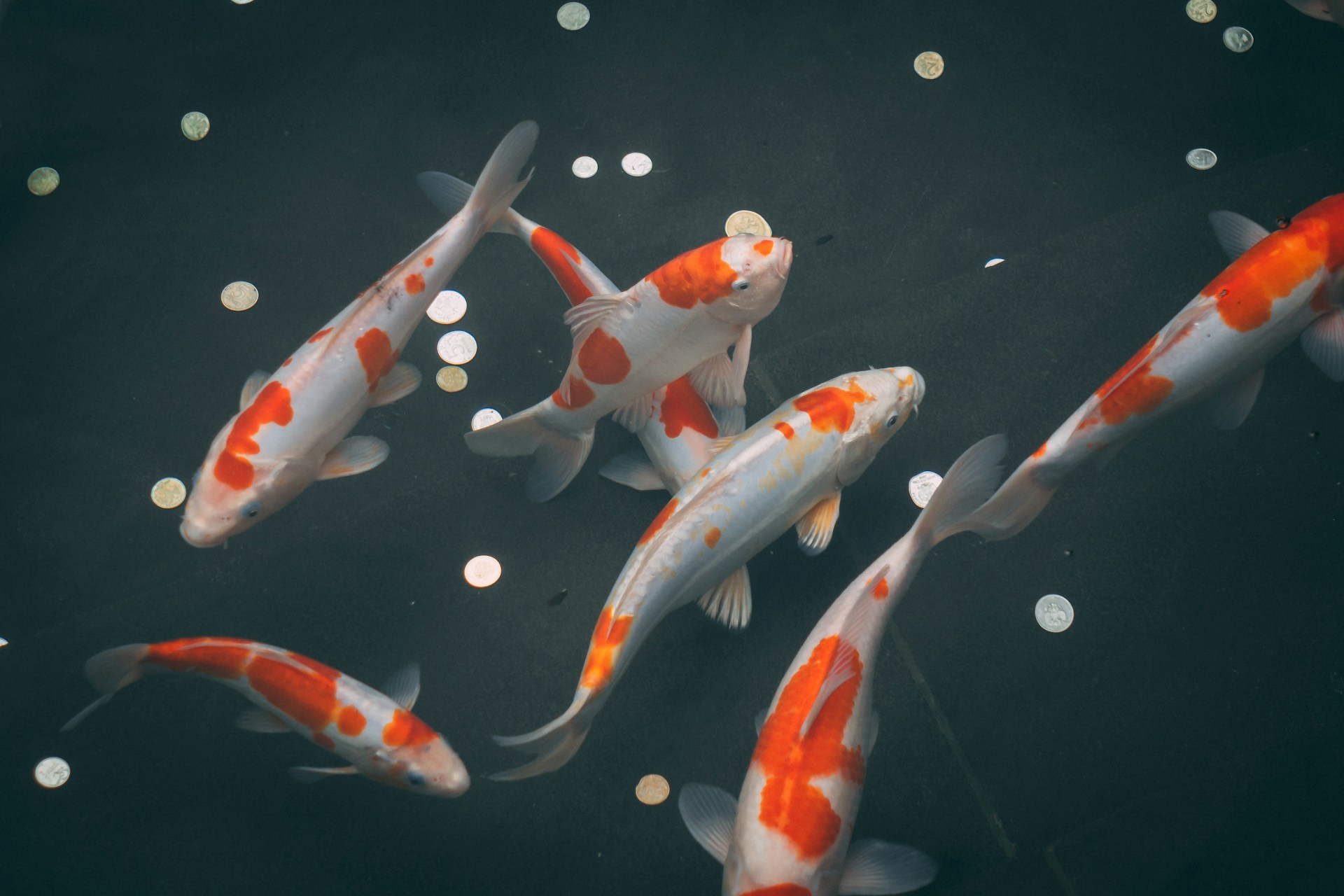
River FX on Unsplash
Symbolism and meaning
Strength and perseverance: koi are known for their ability to swim against the current, symbolising perseverance and the strength to overcome obstacles.
Luck and prosperity: colourful koi are often considered bringers of luck and prosperity. It was believed that keeping koi brought abundance and wealth into the home.
Love and friendship: koi carp are also a symbol of love and friendship, as they are often seen swimming in pairs or groups.
Mythology and legends
Koi carp also have their place in Japanese mythology and legends. One of the most famous is the legend of the koi carp and the dragon waterfall - the Legend of the Dragon Gate. According to the legend, when a koi carp successfully overcomes a strong current and reaches the top of the dragon waterfall, it transforms into a dragon. This legend symbolises transformation and the achievement of something great through perseverance and effort.
.jpg)
Utagawa Hiroshige (1797 - 1858)
Why keep koi carp?
Koi carp are much more than just beautiful residents of garden ponds. Their history, from their origin in China to the flourishing of breeding in Japan, is a story of aesthetics, perseverance, and symbolism. When you look at a koi carp swimming in a tranquil pond, you not only admire its beauty but also touch upon a millennia-old tradition and a deep cultural heritage.
These fish are friendly and often take food directly from one's hand. They are relatively easy to keep.
And here are a few interesting facts... The most expensive carp in the world sold at auction in Japan in 2018 for the equivalent of 40 million Czech crowns. The oldest carp lived to be 226 years old.
HA-NA-MI and koi carp?
I adore koi carp. Their colours, friendliness, and all the mystical aura surrounding them. Perhaps that's why I hesitated for so long to capture them with a brush. Would I be able to capture all of this? In the end, I decided to portray them in a line drawing. And then to enliven the reproductions with gold and silver colours.
So, I present to you the collection...
The collection featuring koi carp even has two parts. Carp in a lotus pond and two carp circling the moon's reflection in the water.
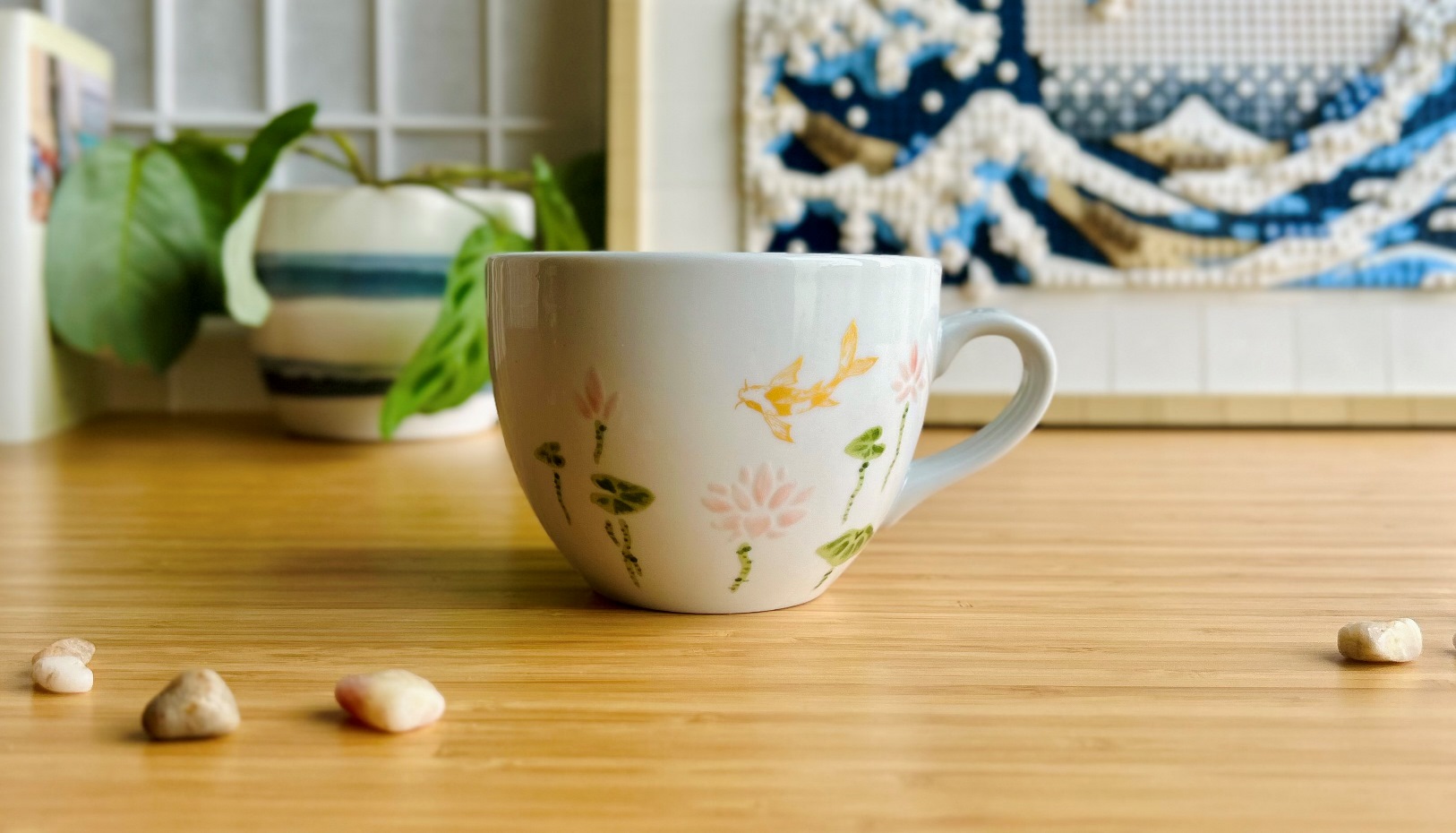
Are you intrigued by the motif of two koi and the moon? What does it actually symbolise?
The symbolism of two koi carp is deeply rooted in Japanese and Chinese culture and encompasses several significant aspects:
Yin and Yang: two koi carp often represent harmony and balance, similar to the Yin and Yang symbol. One carp can be male (Yang) and the other female (Yin), symbolising the perfect harmony of opposites.
Love and loyalty: two koi carp are also a symbol of love and devotion between partners. They represent a strong and enduring bond that can overcome all obstacles.
Spiritual growth: in Feng Shui, two koi carp are also a symbol of spiritual growth and enlightenment. They represent the path to inner peace and harmony.
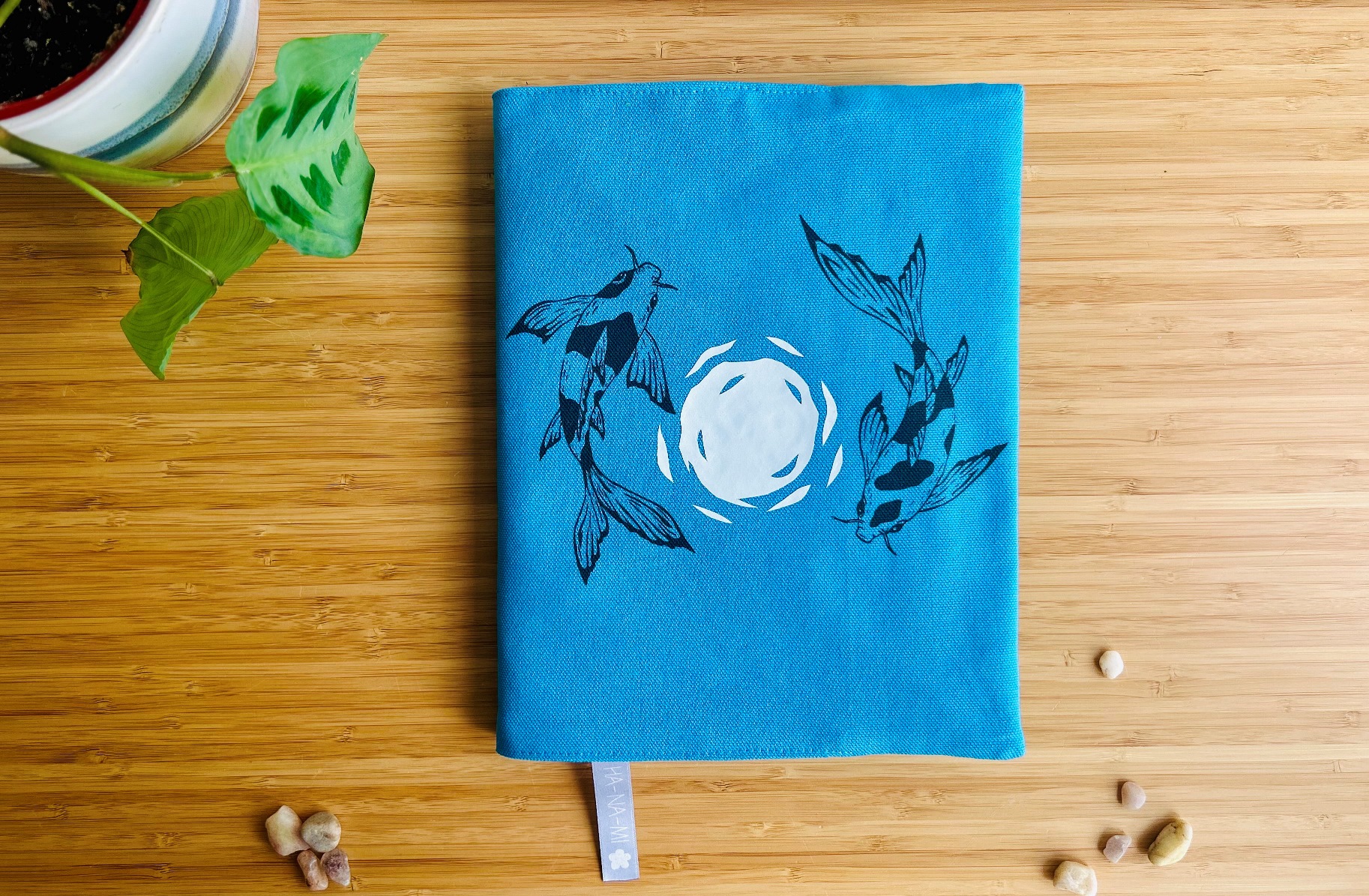
The symbolism of koi carp and the moon can be profound and multifaceted, combining elements of nature, mysticism, and inner peace:
Harmony and balance: koi carp swimming under the moonlight can symbolise harmony between earth and sky, balance between the serenity of the night sky and the movement of the water's surface.
Mystical connection: the moon is often associated with mysticism and mystery, while koi carp symbolise perseverance and strength. Together, they can represent a journey to uncover hidden truths and a deeper understanding of life's mysteries.
Calm and meditation: moonlight on a pond with swimming koi carp can symbolise peaceful meditation and connection with nature.
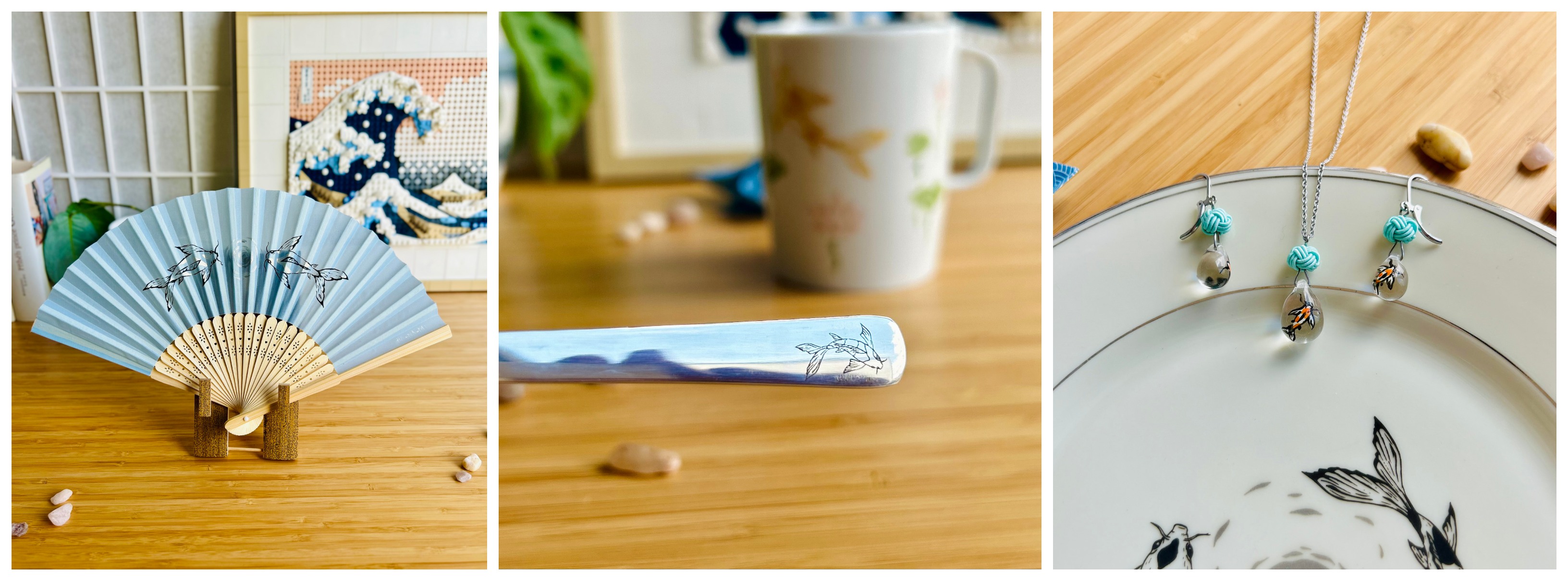
Are you captivated by koi carp? In the Lake Jewels collection, you can find them on porcelain, textiles, jewellery, fans, paper trinkets, and other products.