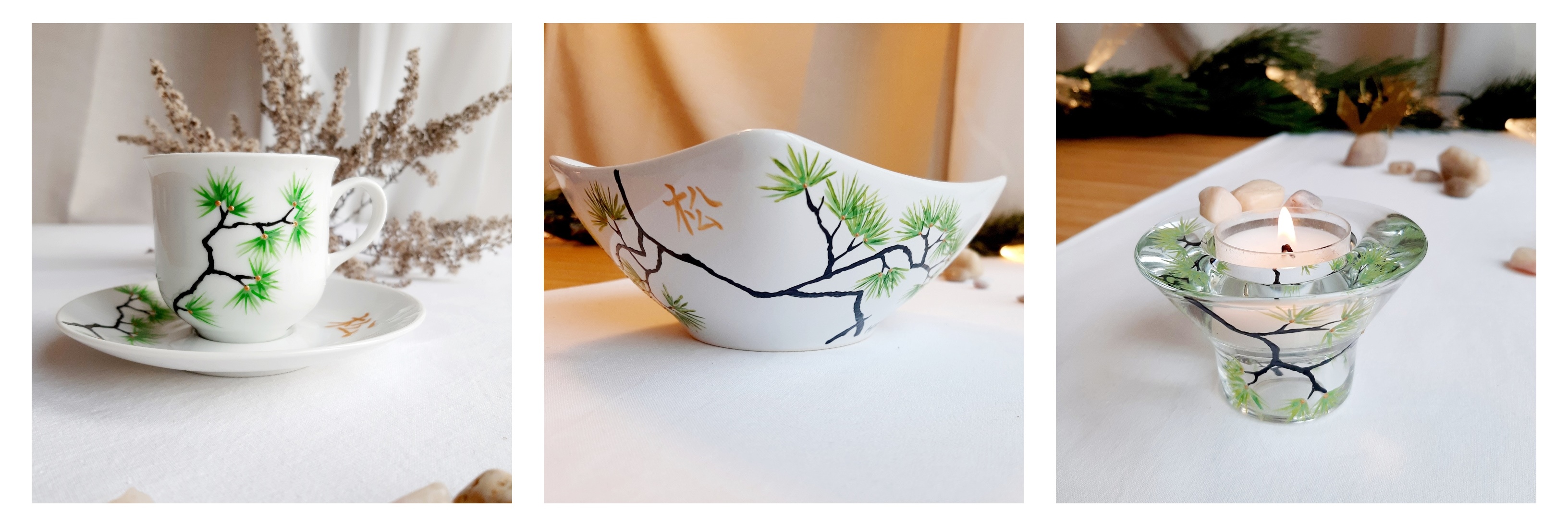
ABOUT THE ANCIENT PINE COLLECTION
I first discovered the pine tree, as a typical tree for Japanese and Chinese art, in the book
The Plant as a Symbol in Chinese and Japanese Culture. At first glance, however, I didn't know
how to portray it in a way that I would like. It wasn't until I visited the National Gallery in Prague that I was captivated by a
vase depicting cranes, peonies (presumably), and pine branches in the background. At that moment, I
really liked the detail of pine needles with a branch, and the motif I wanted to try began to emerge.
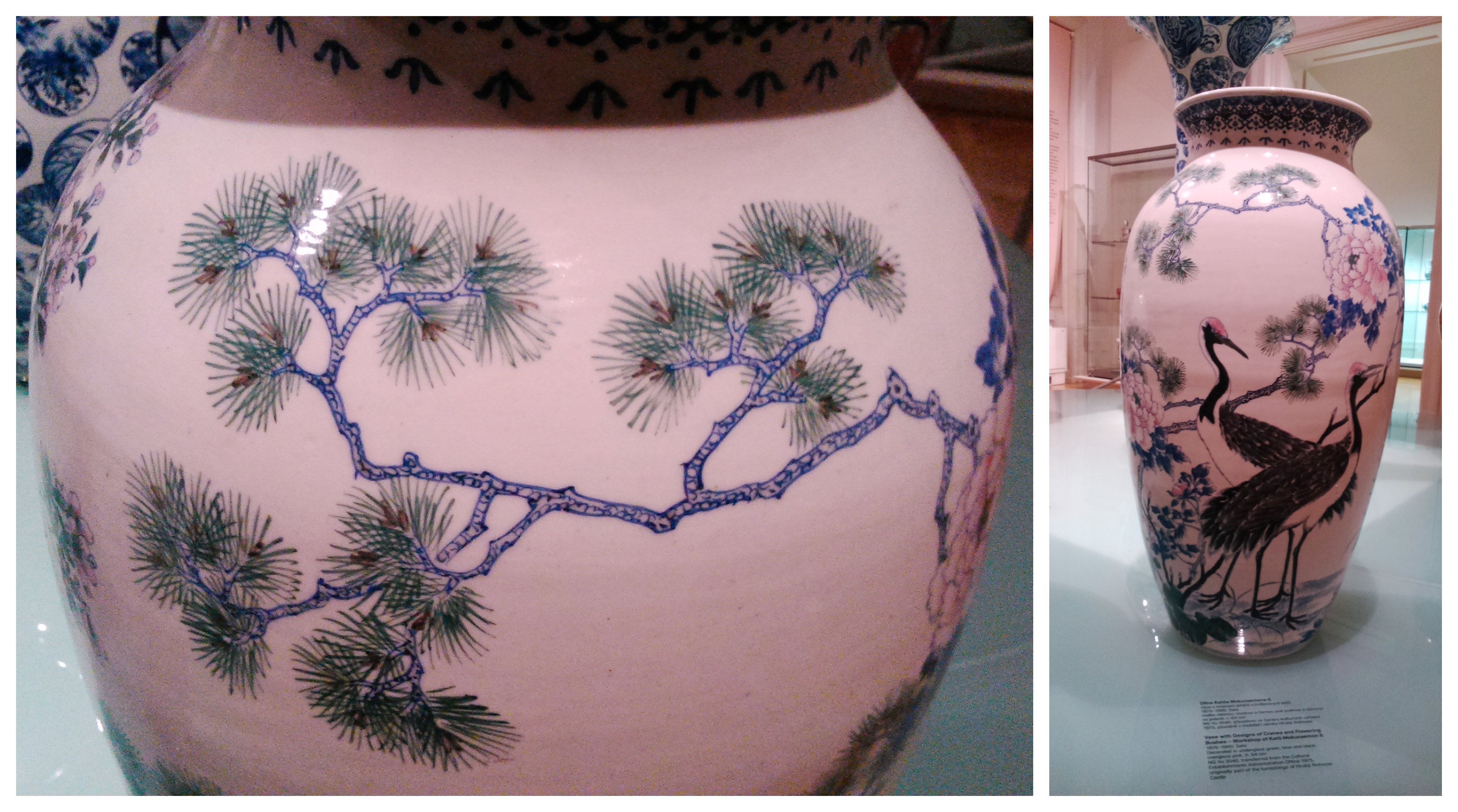
Workshop of Katō Mokuzaemon II., Vase with a motif of cranes and flowering shrubs, 1870 – 1900, Seto, National Gallery in Prague
Pine (Japanese matsu) is a symbol of longevity. We encounter pine trees in Japanese
gardens, painting, and poetry. In Japan, the pine tree is associated with winter. In both Japanese and Chinese gardens,
they are often planted on the banks of ponds or directly on islets in the middle of water. Here, their branches
lean over the water surface and are reflected in it. One of the most important Far Eastern pines is
Japanese red pine, also called red pine, and it is similar to our Scots pine.
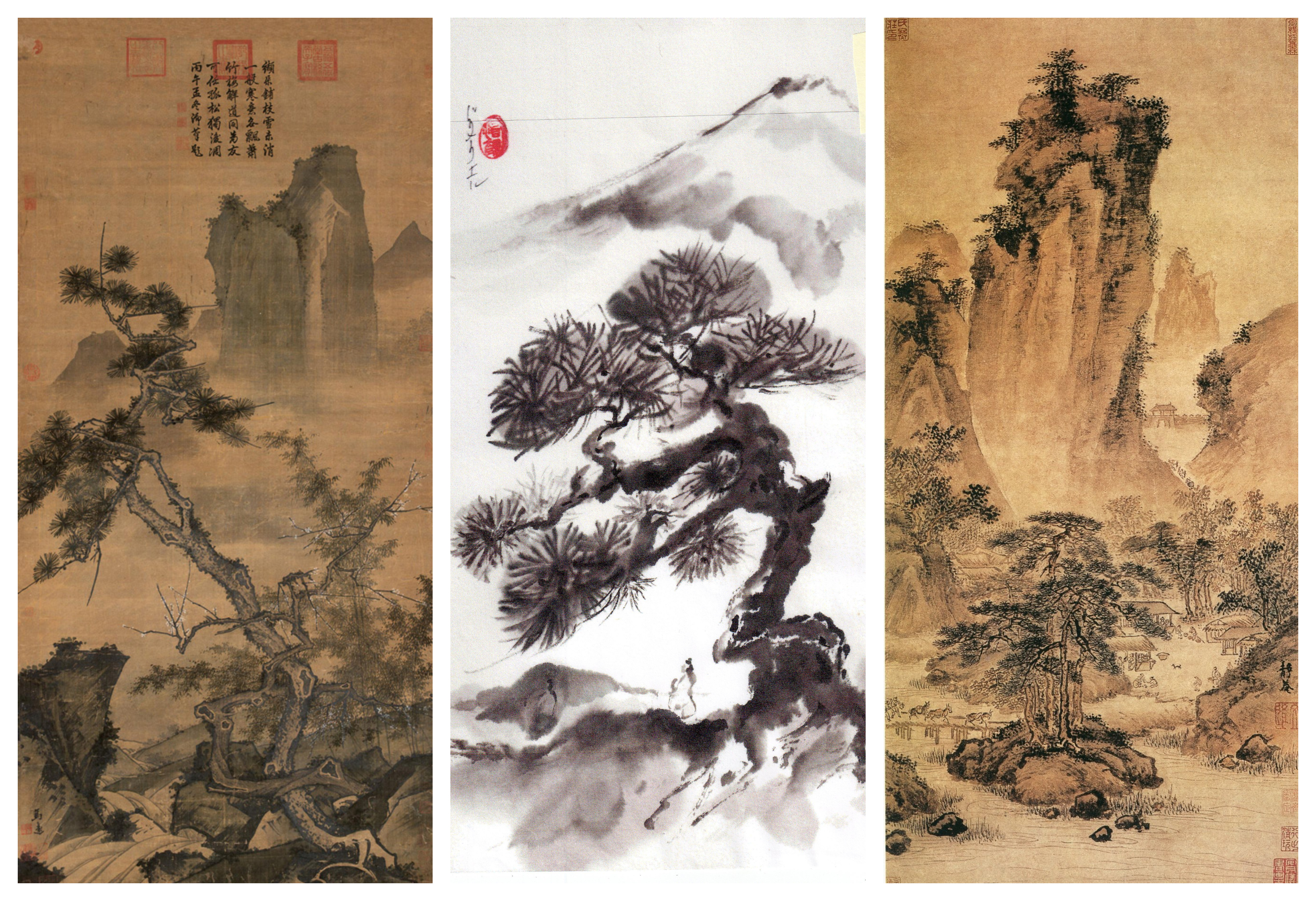
In painting, it is almost always depicted as an old tree (bonsai, among others, are also meant to create a similar impression).
This is also why I decided to name our collection Long-lived Pine.
I first painted the pine motif in 2015. Over time, it appeared on porcelain, glass, wood,
and silk.
You can see the Long-lived Pine collection from this winter traditionally on porcelain, glass, and jewelry.