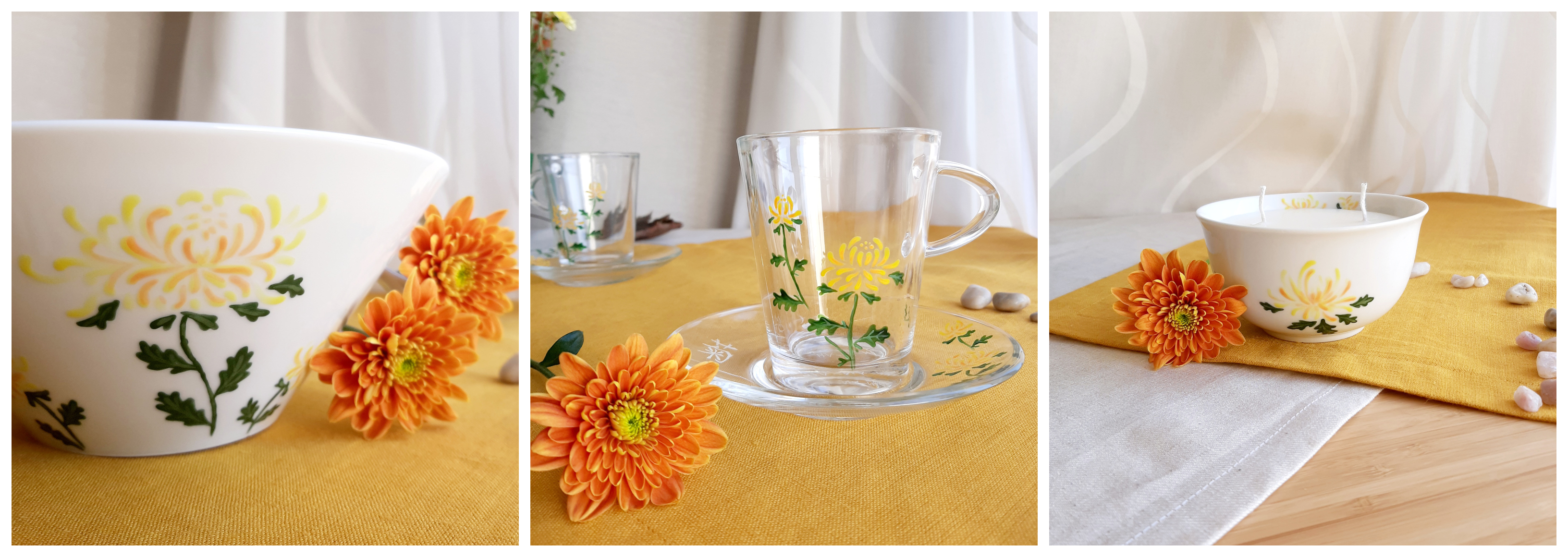
ABOUT THE IMPERIAL CHRYSANTHEMUM COLLECTION
The chrysanthemum is one of the oldest flowers cultivated by humans. In East Asia, it is one of the most popular flowers ever. It is associated with the sun, which its bloom resembles. It is also called the "flower of the autumn sun" (this collection even had the working title "Autumn Sun", but I eventually decided to change it because it was too similar to "Autumn Evening" – an older collection with Japanese maples).
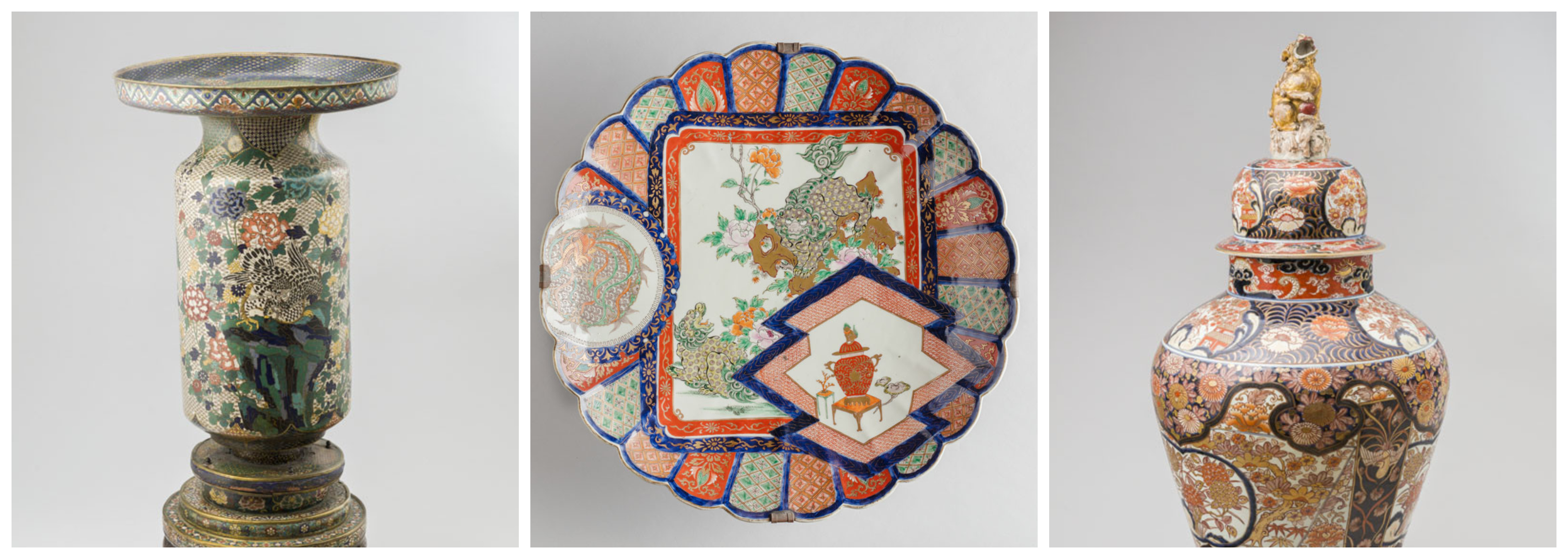
Image source – National Gallery in Prague
The chrysanthemum is a symbol of longevity in China because it is the last autumn flower to bloom. From China, the chrysanthemum also made its way to Japan in the 8th century. Chrysanthemum festivals were regularly held at the Japanese imperial court. A yellow variety called "hironishi" with 16 petals even became the emperor's flower and a symbol of the imperial family. A yellow-orange chrysanthemum is also depicted on the imperial seal (hence the final name of the collection Imperial Chrysanthemum).
 Source Wikipedia – Seal of the Japanese Emperor
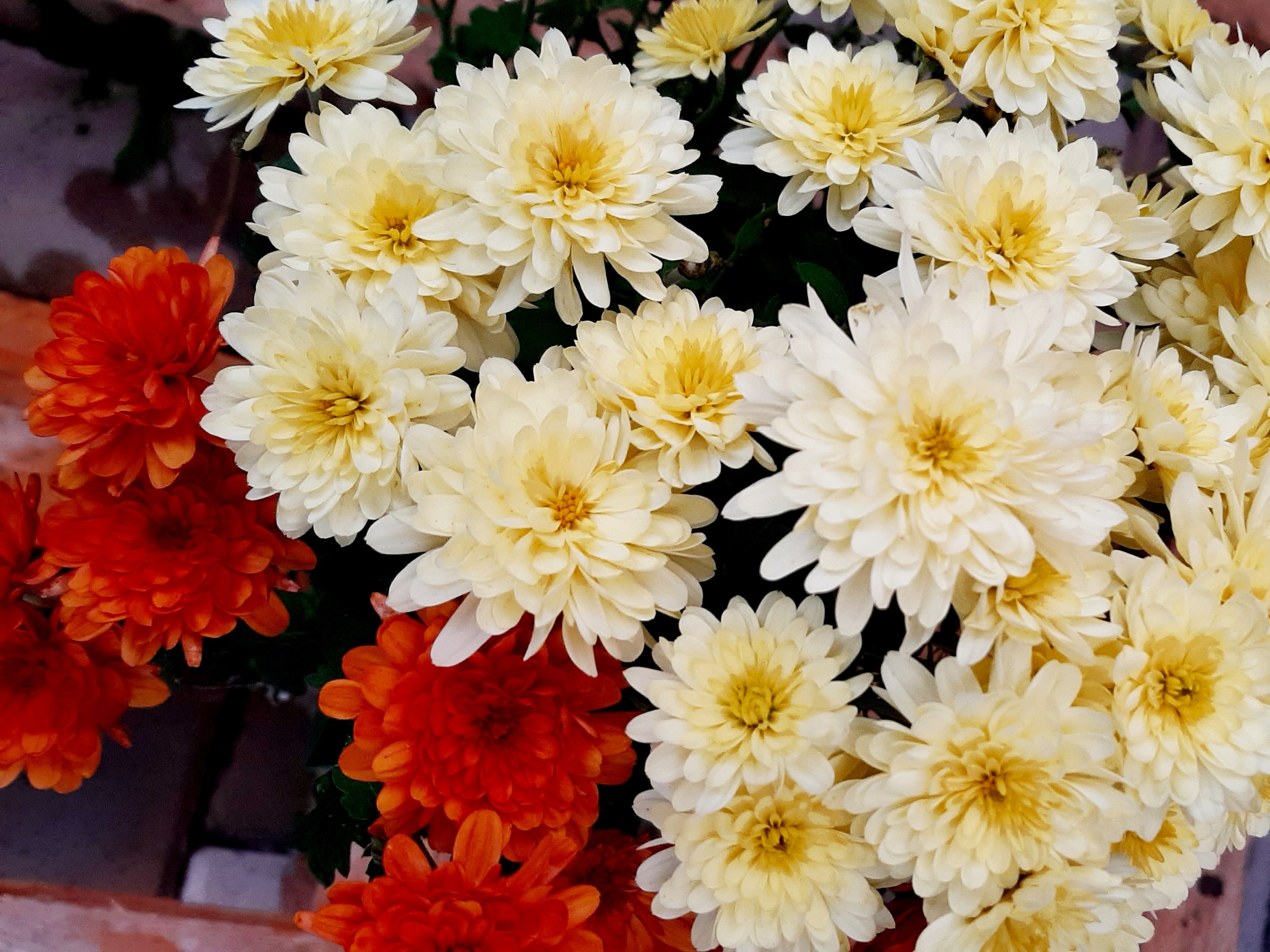
The chrysanthemum has an endless number of color variations. Some species are even grown as bonsai. In Japanese gardens, they have an irreplaceable place both in flowerbeds and in portable containers.
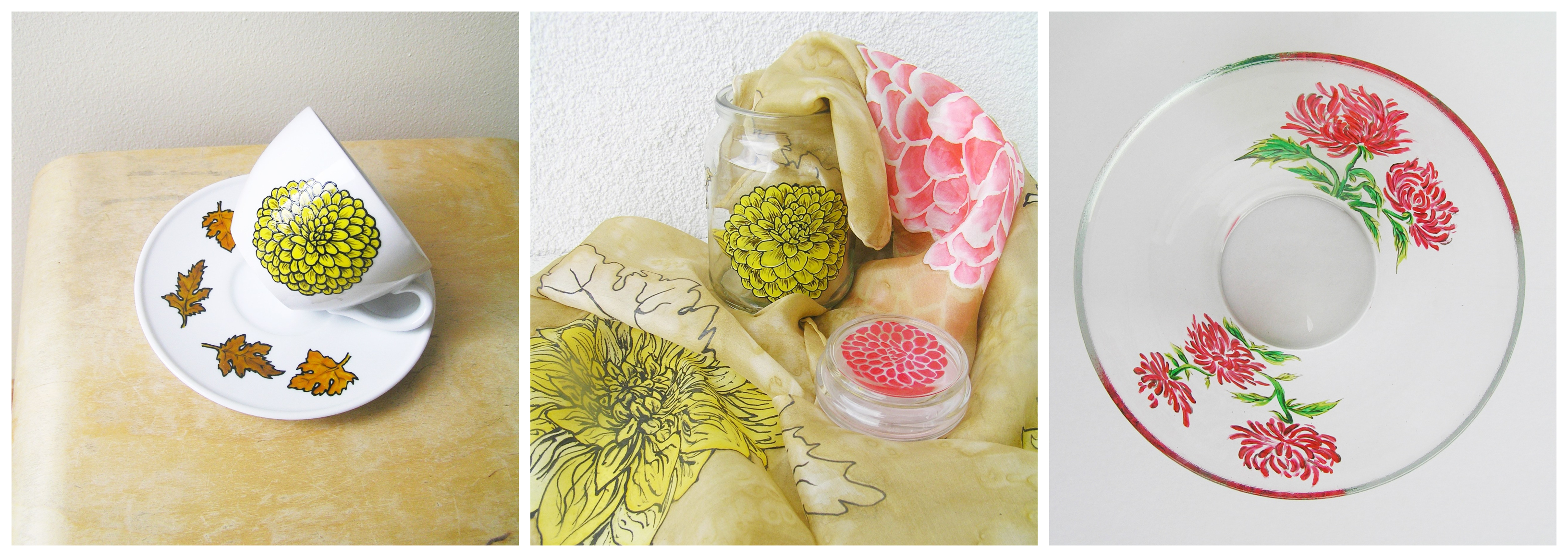
I started painting chrysanthemums in 2018. Even though it is one of my newest motifs, their painting has gone through several phases. The first was a large yellow flower outlined in black with brown leaves. I still think it's one of my most beautiful pictures J. At the same time, however, it was incredibly time-consuming, and therefore unaffordable. That's why I tried to overhaul it from scratch and changed the detailed painting to a free style with red-purple flowers.
In this year's collection Imperial Chrysanthemum, I combined both previous variations. The flowers are painted in a freer style (similar to the bamboos from the Bamboo Grove collection), but they are yellow-orange with large dark green leaves.
The painting on porcelain is once again fired in a ceramic kiln at 1160°C, which gives it greater durability (including the possibility of washing in the dishwasher). However, I still paint vintage porcelain with paints fired at a lower temperature. There are two reasons for this. With older ceramics, I don't know if they will withstand such a high temperature unscathed, and I would be sorry to destroy them. These paints also allow me to achieve finer detail in the painting.
For the glass products, I once again took up the grinder with a diamond tip from Dimapa in combination with delicate painting.
In addition, you can also see this collection on textiles and jewelry.