
ABOUT THE ANCIENT JAPANESE ARCHITECTURE COLLECTION
Japanese architecture is unique for its aesthetics, harmony with nature, and emphasis on simplicity and functionality. Historical buildings reflect not only technical skills but also a philosophy of life connected with Shintoism and Buddhism.
Philosophy and aesthetics
Wabi-sabi – the beauty of imperfection and transience. A concept reflected in natural materials and handcrafted production.
Ma – a concept that emphasizes empty space and its significance in the harmony of the whole.
Shakkei – an urban planning solution where the building and garden merge with the surrounding landscape.
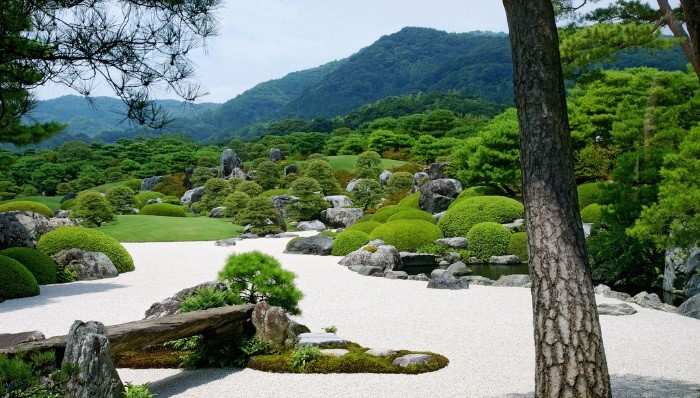
Adachi Gardens – Where does the garden end and the open landscape begin?
Photo: 663highland via Creative Commons Legal Code

Traditional materials
Wood – the most common building material in Japan, used for all types of structures. Cedar, cypress, pine, and bamboo were primarily used. Why wood? Because its flexibility allows it to withstand earthquakes.
Stone – wooden structures were firmly anchored with stone foundations, which were important for the stability of the building. Stone was mainly used for castles and their fortifications.
Roof tiles (kawara) – clay or ceramic tiles that adorned the roofs of palaces, temples, and castles. Their appearance is characteristic of Japan.
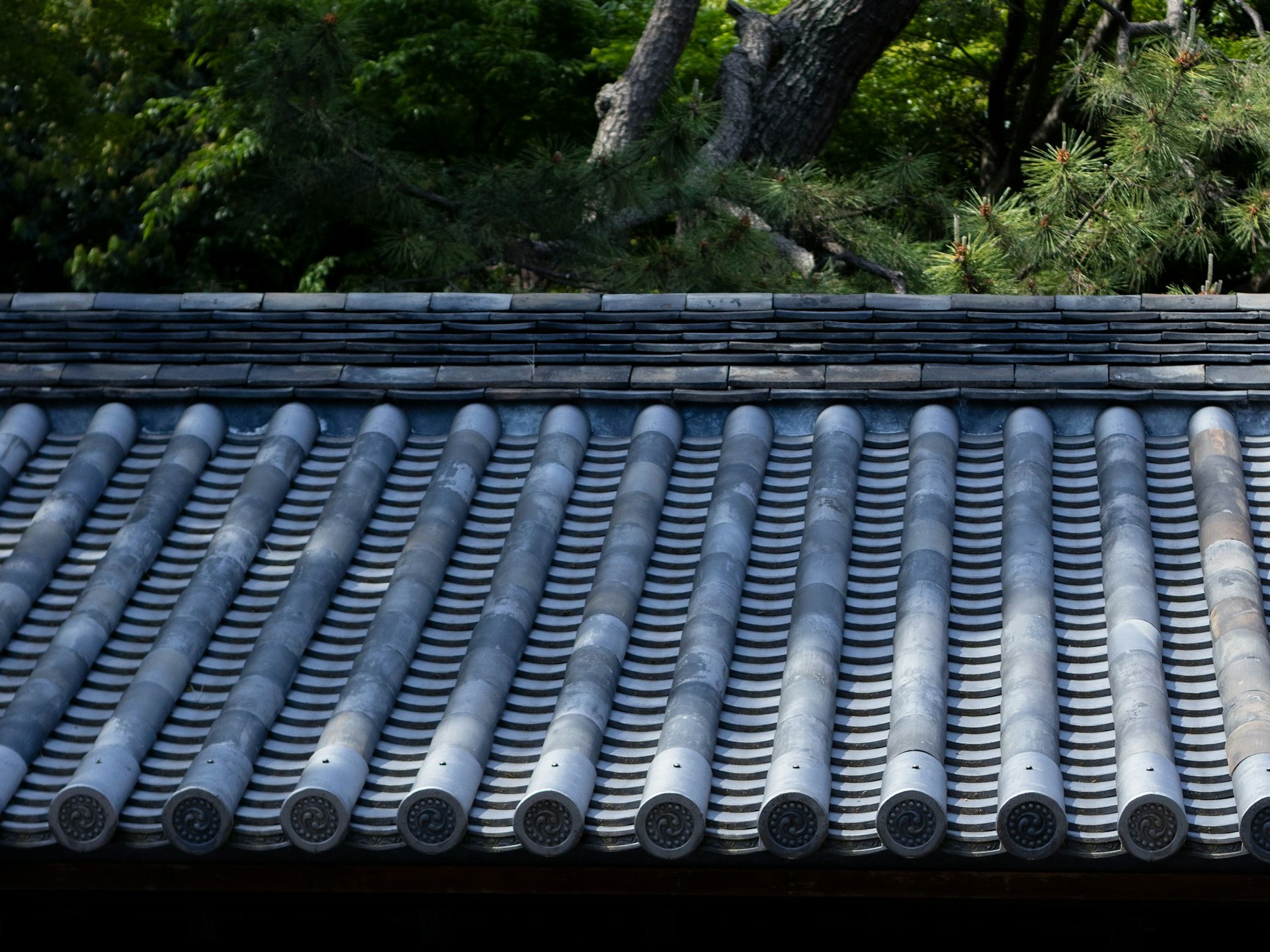
Detail of kawara roof tiles on the Imperial Palace in Tokyo
Photo by Kiya Golara on Unsplash
Pagoda
Japanese pagodas (塔, tō) are multi-storied towers with roots in Indian stupas. They arrived in Japan from mainland China and Korea along with Buddhism in the 6th century. The oldest surviving pagodas in Japan date from the Asuka period (6th–8th century) and were part of temple complexes.
The oldest surviving pagoda is the pagoda at Hōryū-ji temple (built around 607), which is also one of the oldest wooden structures in the world. The pagoda in To-ji in Kyoto is the tallest wooden pagoda in Japan (55 m).
The most common are three-storied and five-storied pagodas, with each floor symbolizing one of the five Buddhist elements (earth, water, fire, wind, and sky). Traditionally, they were built of wood, sometimes with a stone base. The purpose of building pagodas was to house Buddha's relics. Pagodas protect their surroundings and are a symbol of enlightenment. Interestingly, people do not enter pagodas, but prayer areas or paths for performing rituals are placed around them.
To this day, pagodas remain a significant part of Japanese temple complexes and an iconic element of the Japanese landscape.
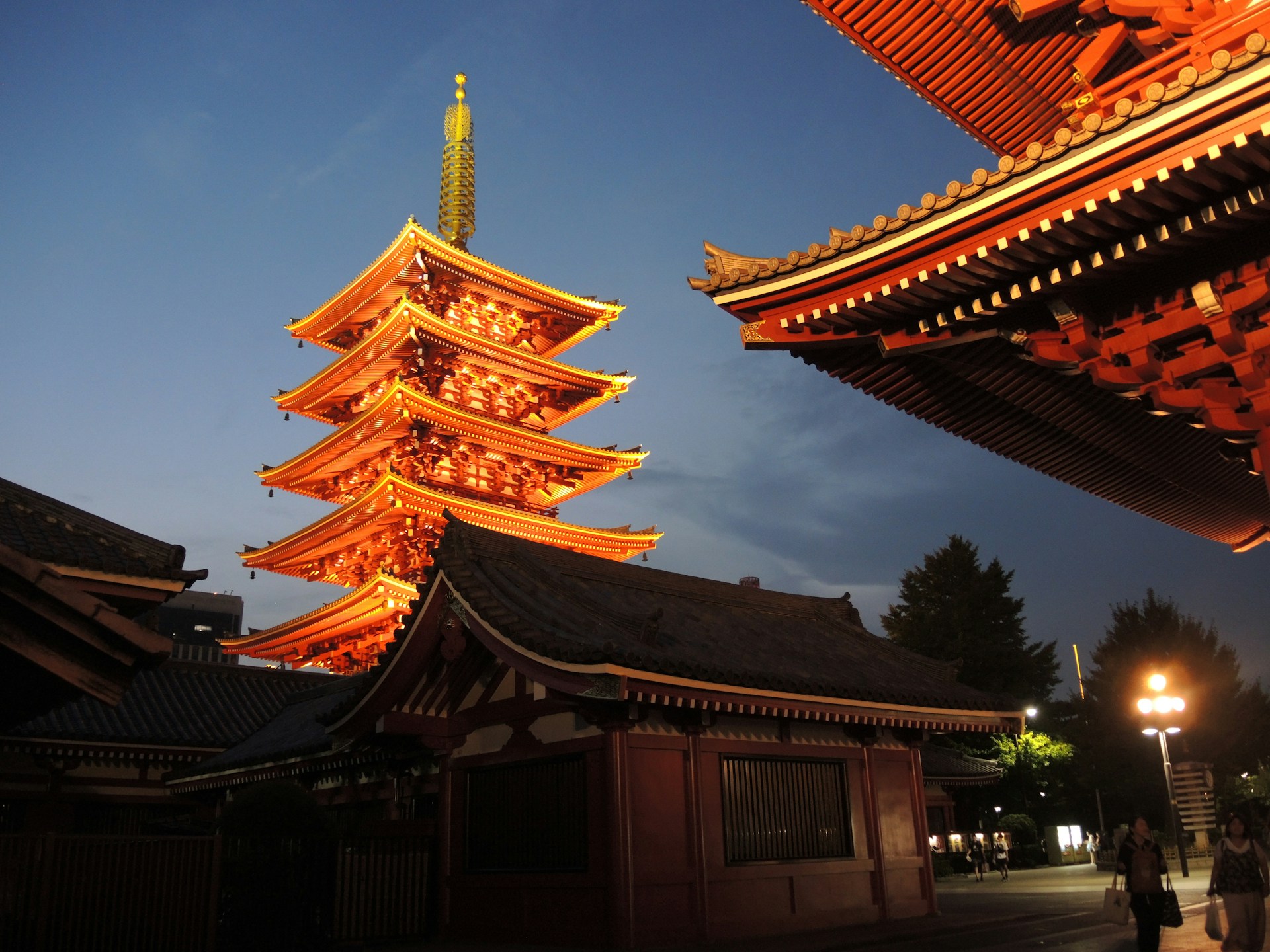
Photo by Montse Monmo on Unsplash
Torii gate
The torii gate (鳥居) is an iconic element of Japanese architecture and an inseparable part of Shinto shrines (jinja). The exact origin of torii is not entirely clear, but several theories exist. It may have been inspired by similar gates in India or China. However, it may also originate from indigenous Japanese traditions and symbolize the transition between the profane and sacred space. The oldest surviving written record of torii dates from the Heian period (8th–12th century).
A torii marks the entrance to the sacred area of a Shinto shrine. By passing under it, visitors symbolically leave the mundane world and enter the spiritual realm. The gate also represents the boundary between humans and deities (kami). Some torii have inscriptions or wooden plaques with the name of the shrine or the name of the donor who funded the gate.
They often stand on the path to the main shrine, sometimes in multiple rows. The most famous torii is the floating gate at Itsukushima Shrine on Miyajima Island. Even some businesses or homes have their own small torii as protection against misfortune. Torii are also built as a thank you to deities (e.g., the thousands of red torii at Fushimi Inari Taisha in Kyoto, donated by worshippers).
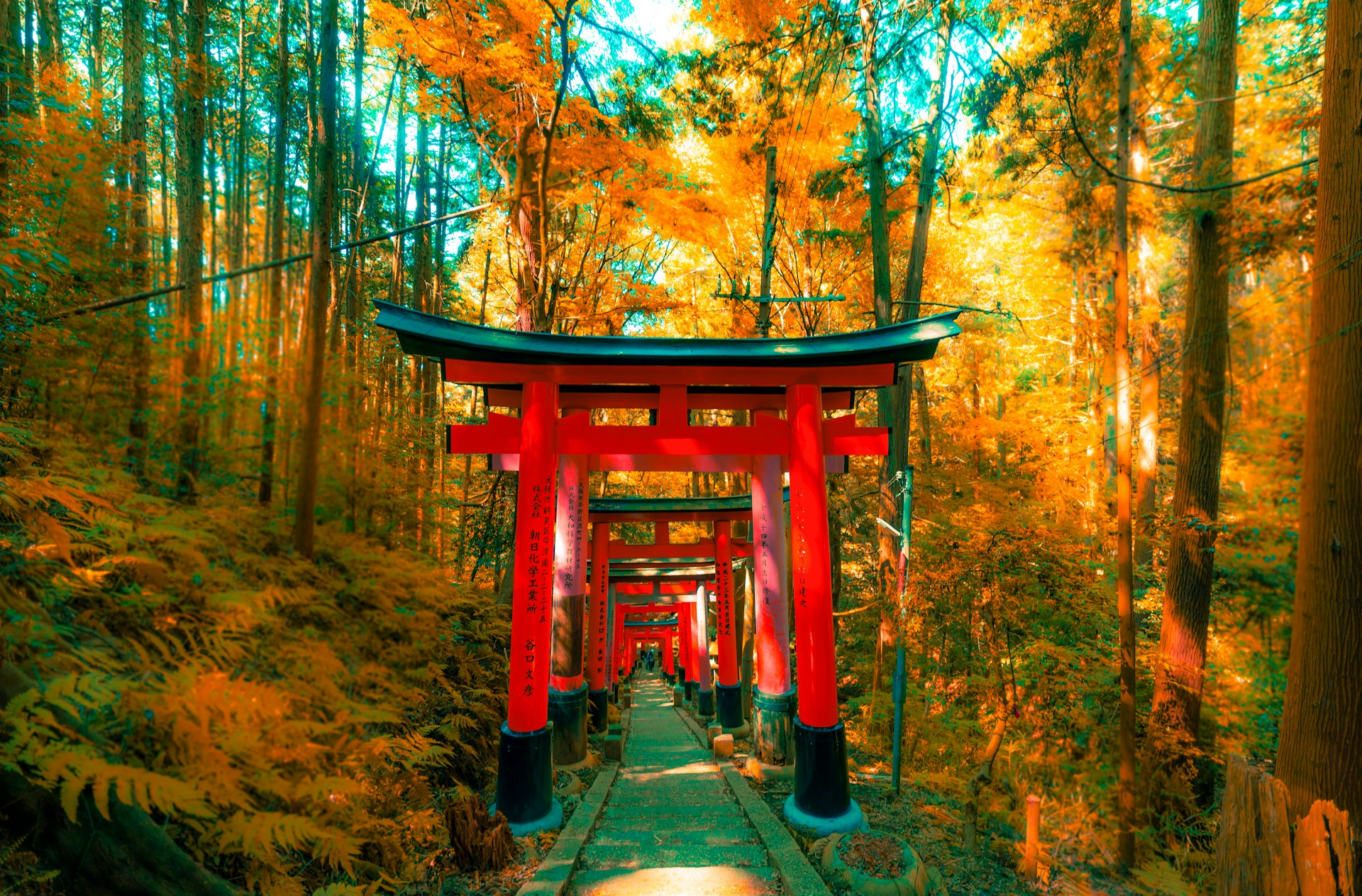
Fushimi Inari Taisha, Kyōto-shi
Photo by Jezael Melgoza on Unsplash
Castle
Japanese castles (shiro, 城) are structures that served not only as military fortresses but also as residences for powerful samurai and symbols of their authority. Most surviving castles date from the Sengoku period (15th–17th century) and the Edo period (17th–19th century). Castles were key military centers during clan conflicts and were transformed into noble residences after the unification of Japan.
Many castles, however, were destroyed during the Meiji reforms (1868–1912) because they were considered symbols of the feudal past. A number of castles were also bombed during World War II. After the war, reconstructions began, and some castles were restored as museums.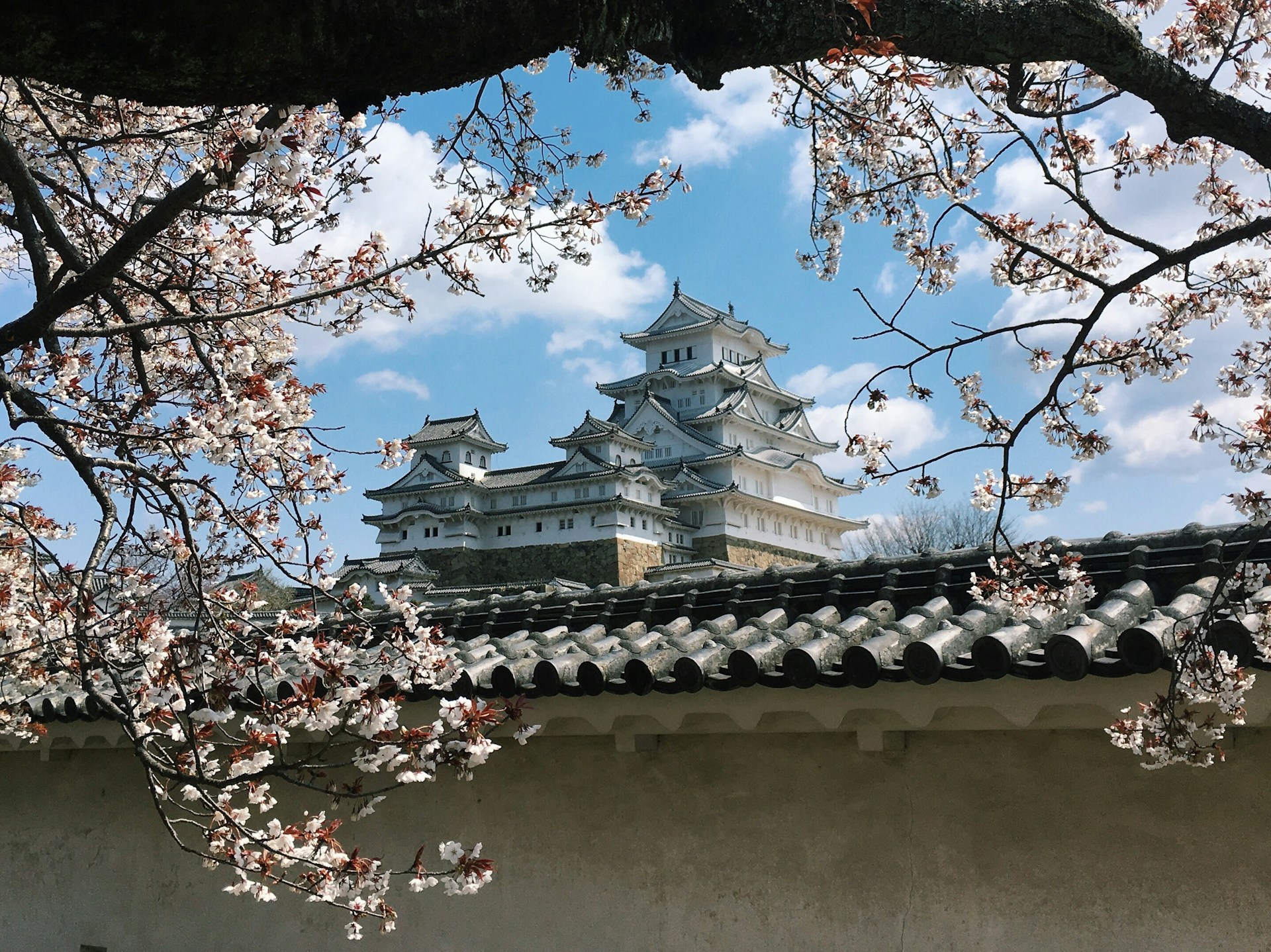
Himeji-jō – “White Heron Castle”, Hyogo
Photo by Dino Johannes on Unsplash
HA-NA-MI and architecture?
As some of you may know, I am a trained architect. And I worked as a project designer for more than 10 years. But man proposes, and God disposes... For now, I keep architecture as a hobby. And because I've always been interested in history, it was only a matter of time before I delved into Japanese historical architecture.
However, I hand-painted pagodas and torii gates on mugs, glasses, and cushions right from the beginning of my creative work 10 years ago.
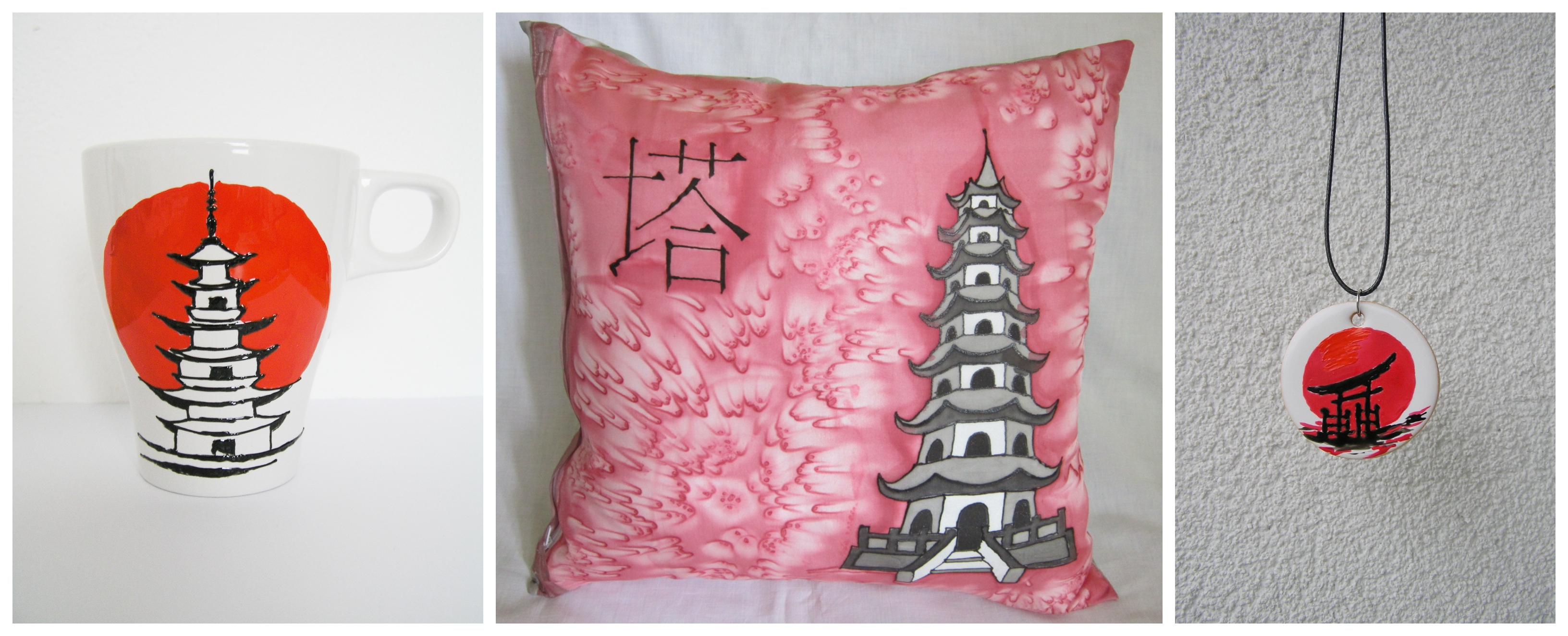
Ancient Japanese Architecture Collection
First collection of 2025
Return to roots
A breath of historical Japan
For my collection of Japanese historical architecture, I chose 3 iconic structures that I introduced at the beginning of the article.
A tiered pagoda associated with Buddhism
A Torii gate leading to a forest Shinto shrine
A castle surrounded by deep forests
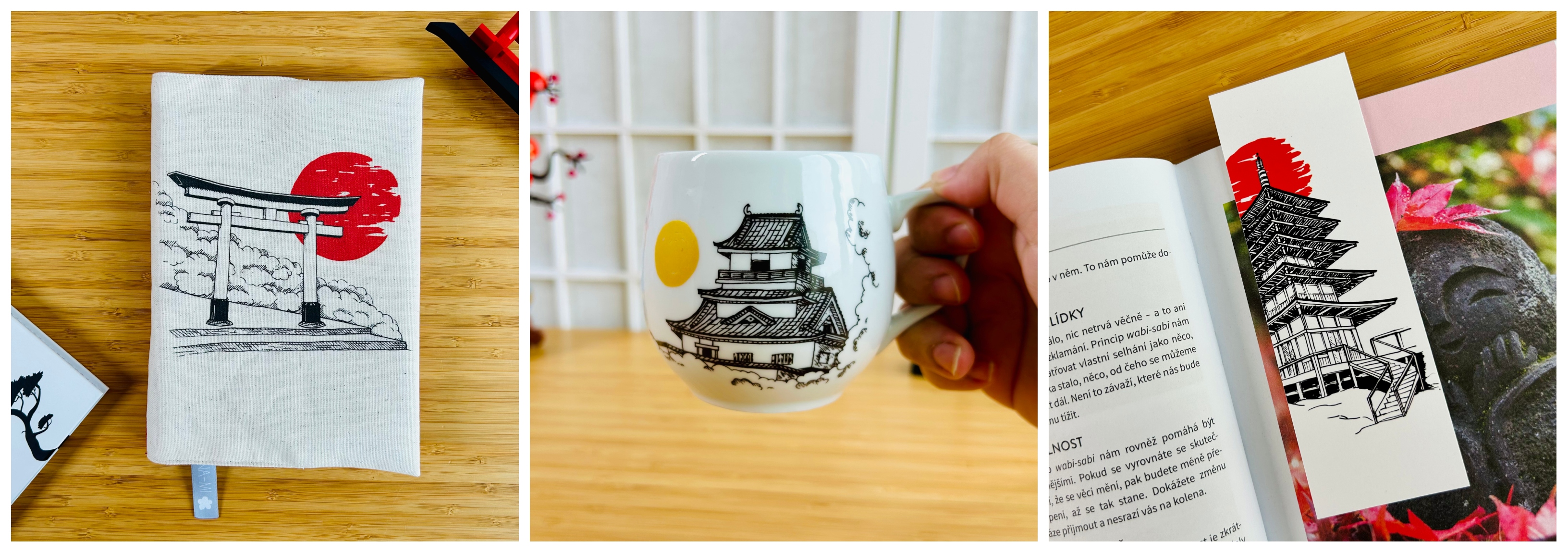
And I complemented them with a golden and red sun, as a symbol of Japan. This collection full of history can be found on porcelain, textile products, and paper trinkets.