
What does summer in Japan sound like?
Summer in Japan is inextricably linked to the wind chimes, known as fūrin (風鈴). Its gentle ringing is carried by the breeze, and people perceive the sound as a cooling effect during the hot summer. A piece of paper called tanzaku (短冊) is usually hung on the fūrin to make it chime even with just a light breeze.
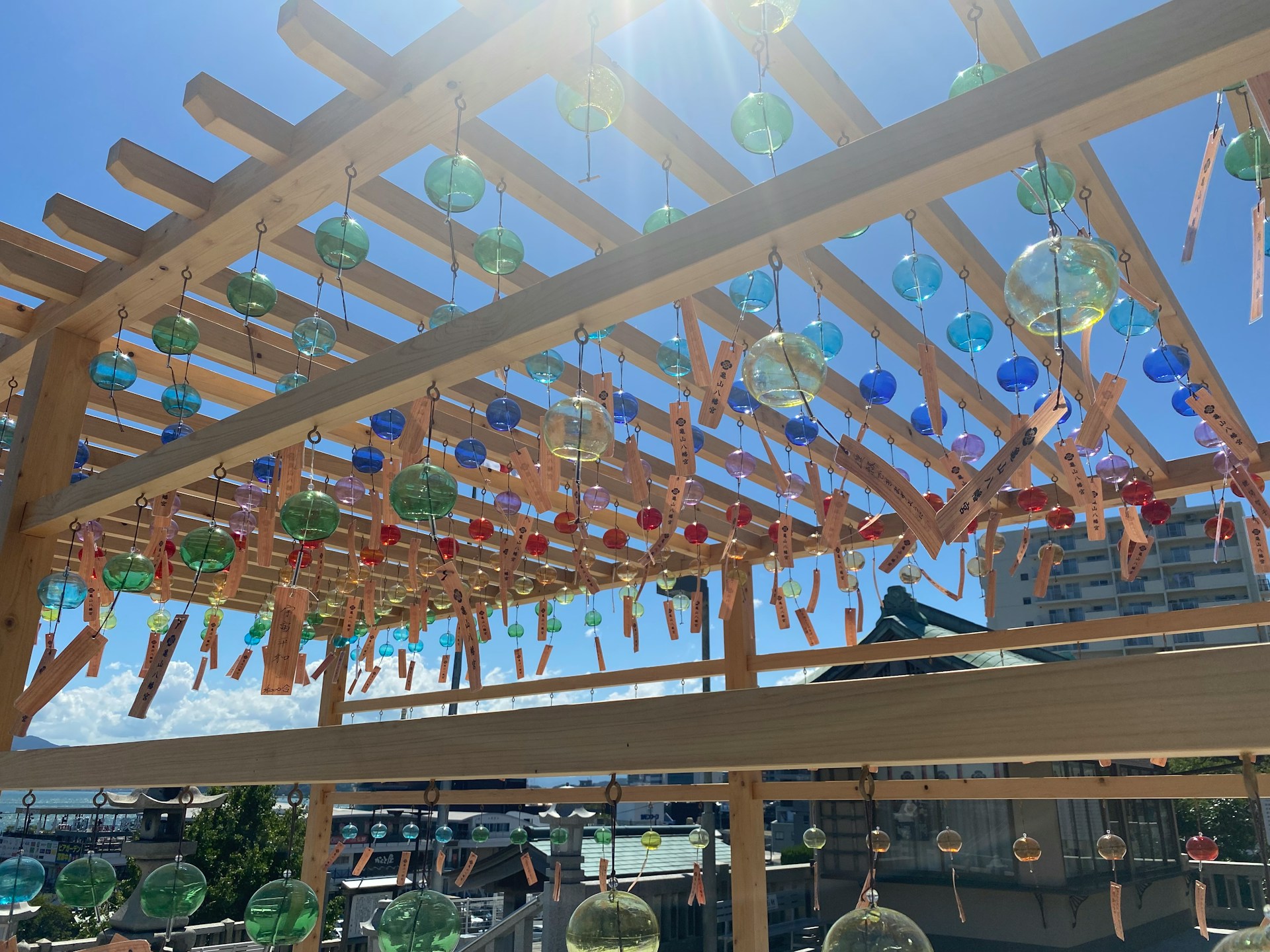
Photo: Kanae Kanesaki by Unsplash
History of fūrin
Fūrin most likely originated in China. During the Tang dynasty, metal wind chimes were hung in bamboo forests and used for divination. The word fūrin was first used in Japan during the Heian period, when they were hung from eaves, especially in Buddhist temples, as talismans to ward off evil spirits. Even today, we can find them at shrines and temples.
During the Edo period, fūrin were made by free glass blowing, which was very expensive, and therefore mainly feudal lords and wealthy merchants acquired them. Thus, fūrin began to be made from other materials such as metal or ceramics.
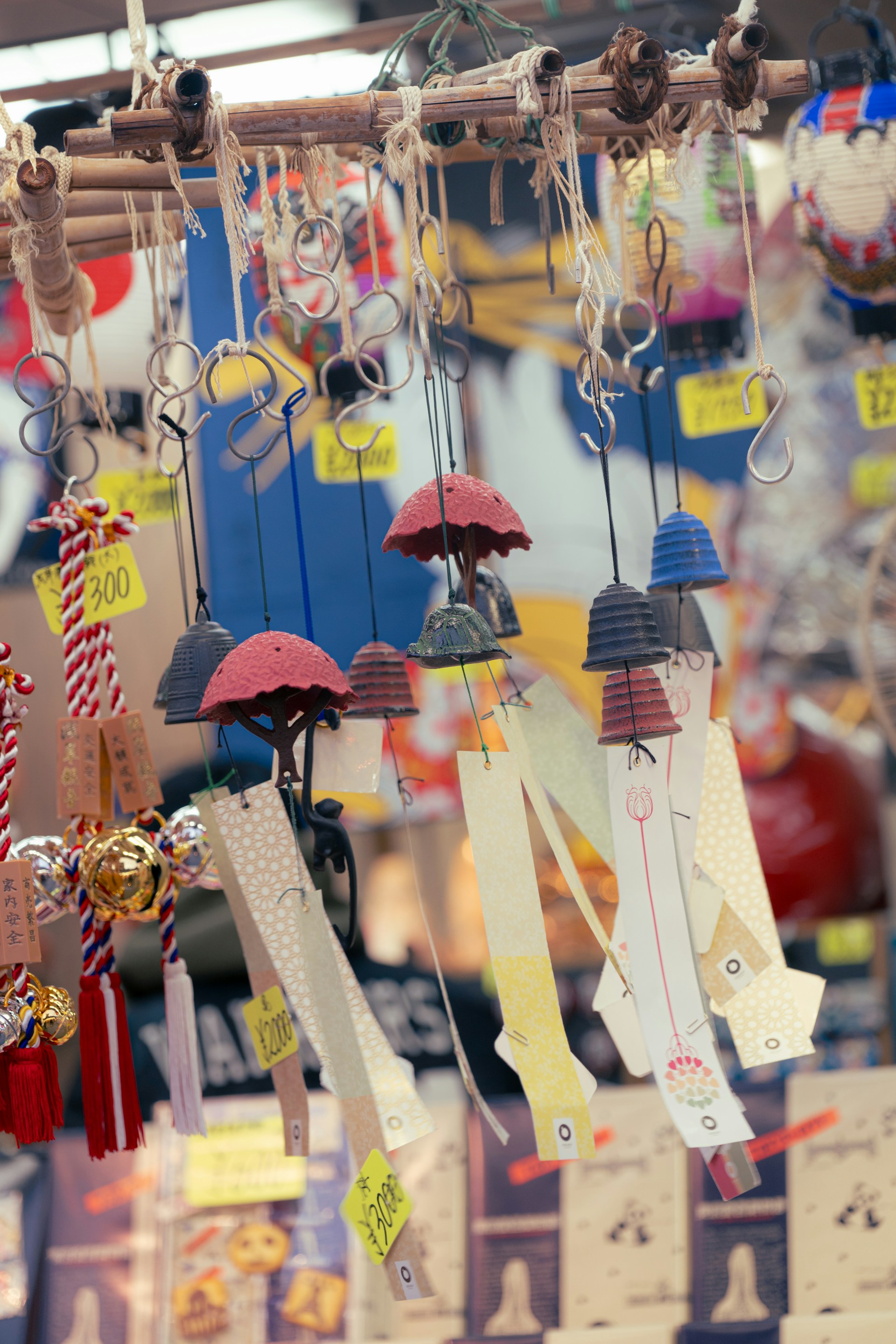
Photo: C Cai by Unsplash
Making of fūrin
Thanks to industrially produced glass bulbs, fūrin are now affordable and very common in Japanese homes during the summer months. But the tradition of free-blown glass has not died out, and there are still craftsmen who master this art.
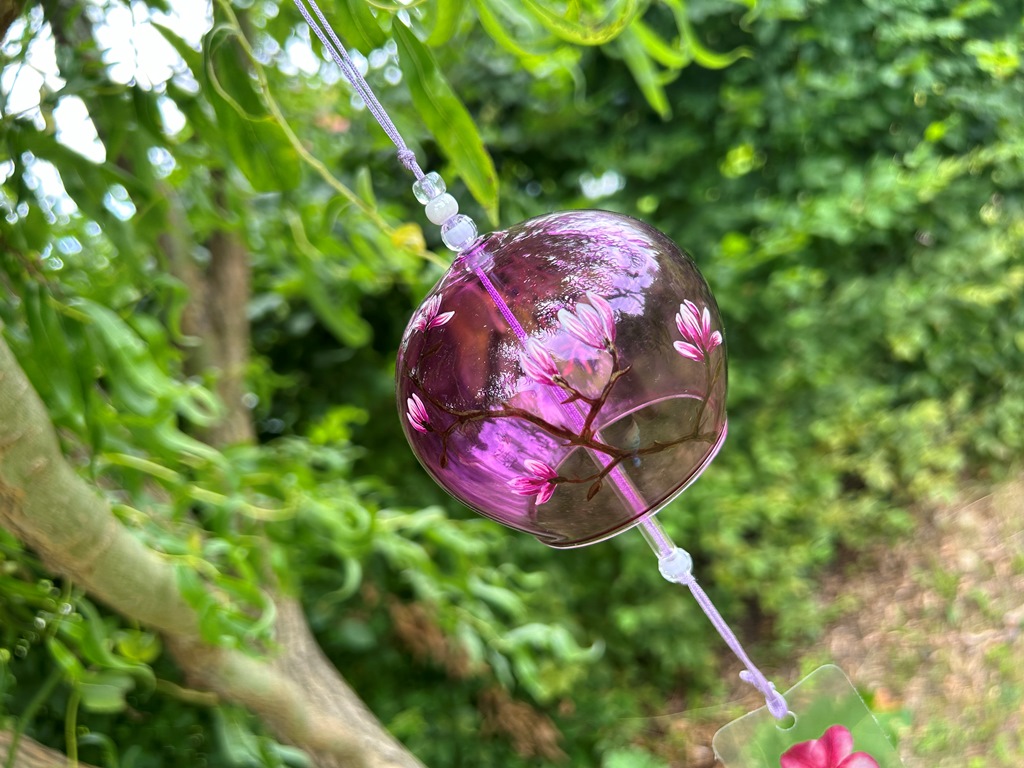
Fūrin are hand-painted with traditional Japanese motifs. Inside the fūrin, a small heart (glass tube) is hung, which hits the walls of the bell when it moves, creating a characteristic sound. A strip of paper (tanzaku) also hangs from the fūrin, catching the wind and causing the heart to move even with a light breeze.
Modern fūrin designs often combine traditional elements with new, innovative shapes and motifs, beautifully demonstrating how an ancient tradition can live and evolve in the modern world.
Symbolism of fūrin
In Japanese culture, fūrin is considered a talisman that brings good luck and protects the house on which it hangs. Its gentle sound is believed to clear the surroundings of negative energy and bring peace and harmony. Fūrin also symbolizes the presence of wind, which in Japan is seen as a harbinger of change and movement, reminding of the constant flow of time and the natural cycles of nature.
These Japanese wind chimes somehow passed me by for a long time. I only became interested in them when Capi.mizuhiki started working on them, and I completely fell in love with them. Initially, I planned to have the glass bulbs made in Bohemia. After all, there are more than enough skilled glassmakers here. But it ran into my lack of time and cost. So I ordered ready-made fūrin from a seller in China. But I modified them a lot :).
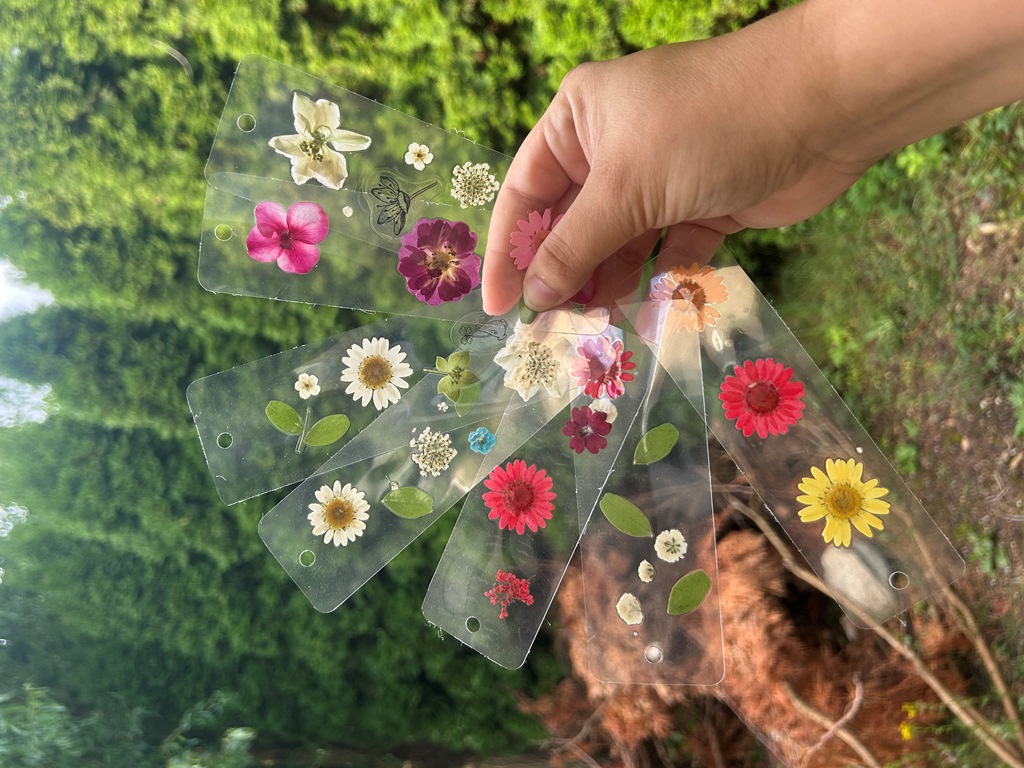
I replaced the paper tanzaku with dried flowers and leaves laminated in transparent film. This beautifully lightened the wind chime. And at the same time, it is 100% waterproof!
I supplemented the original beads with Czech glass beads Preciosa.
And, of course, I went wild with a brush on the glass bulb.
Are you interested in Japanese wind chimes? But you haven't found them with your favorite motif?