
How to apply HA-NA-MI porcelain
I use several types of paints and techniques for decorating porcelain, and I know that it can be quite confusing.
What can go in the dishwasher?
What can go in the microwave?
Where did all those pictures on the mug come from?
That's why in this article, I'd like to explain to you "How to care for HA-NA-MI porcelain".
I use Czech porcelain from North Bohemia. It's high-fired porcelain, making it very durable. This is a key difference from traditional ceramics, which are fired at lower temperatures. This means it's less likely to chip or get damaged.
I hand-paint porcelain with special paints (glazes). These paints are very durable because, due to the high temperature in the ceramic kiln (1160 °C), they fuse with the white porcelain glaze (they melt into it).
How can you recognize hand-painted porcelain?
By the fact that the paintings on it are colorful and do not have sharp edges.

You can safely put these products in the dishwasher and microwave. This is the most durable finish I can create. Each product is an original, and the painted motif will always vary slightly from the photo you see in the e-shop.
Test plate painted with colors fired at 1160°C
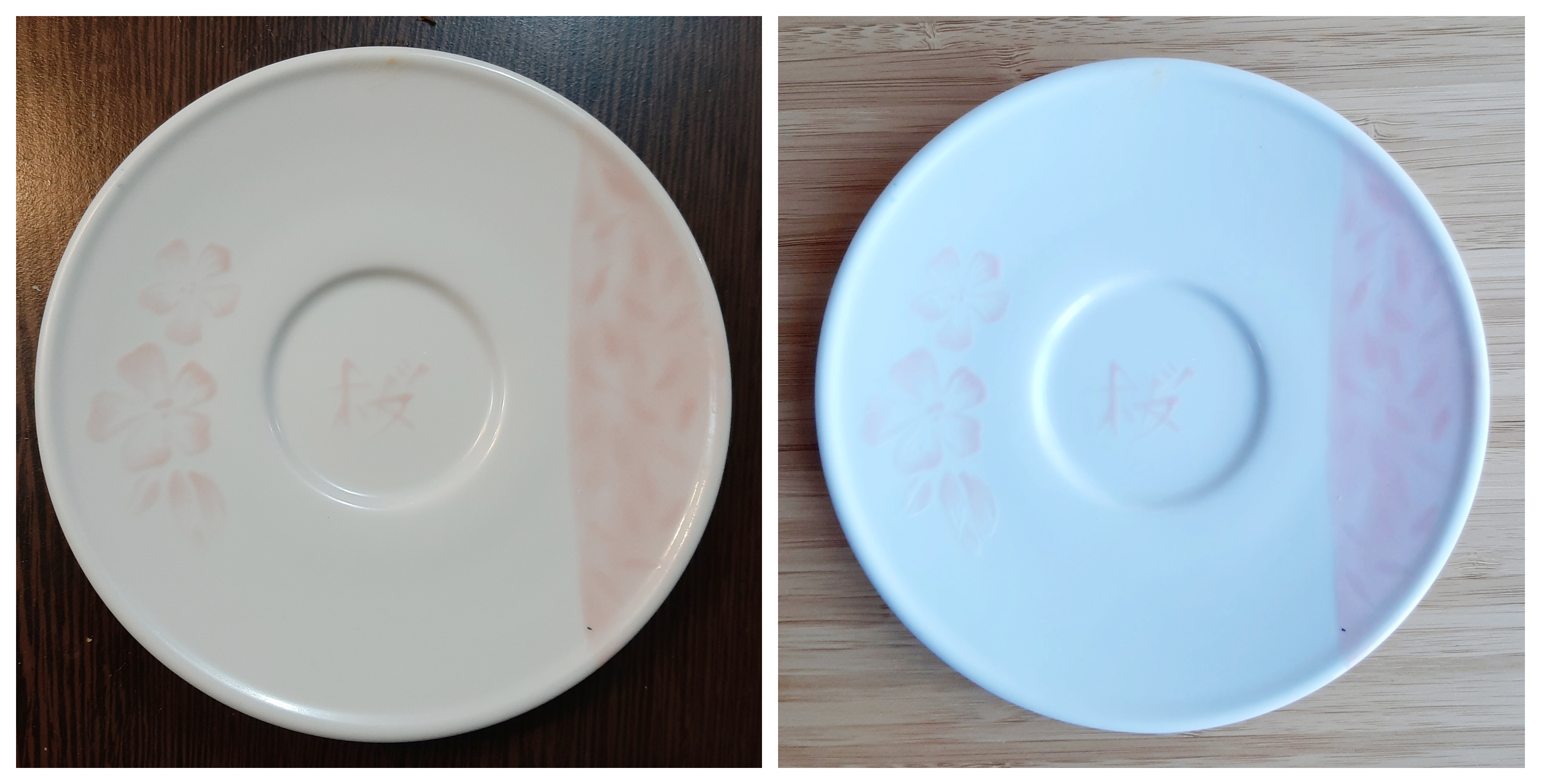
left: newly fired, right: after approx. 300 dishwasher cycles
It may not be completely visible in the photo, but the colors have not changed at all.
The motifs are my original pen-and-ink drawings and computer graphics. You'll surely recognize the pen-and-ink drawings :). These include all the black images from the Spring Japan and Lake Gems collections, as well as Totoros, dragons, nine-tailed foxes, and phoenixes. Sometimes I even enhance them with gold or silver paint. And the computer-generated images? That's the entire Origami collection, which isn't made of paper.
I had the decals custom-made by a specialized Czech company based on my design. I then hand-cut and apply them to the porcelain, which is then fired in a ceramic kiln at 820 °C. Because I hand-decorate each product, the position of the images on the product may differ from the photo in the e-shop (more in millimeters than centimeters :)).
How can you identify porcelain decorated with decals?
The images have sharp edges and are very realistic down to the smallest detail.

These products can be put in the dishwasher and microwave.
Test mug with origami decals fired at 820°C
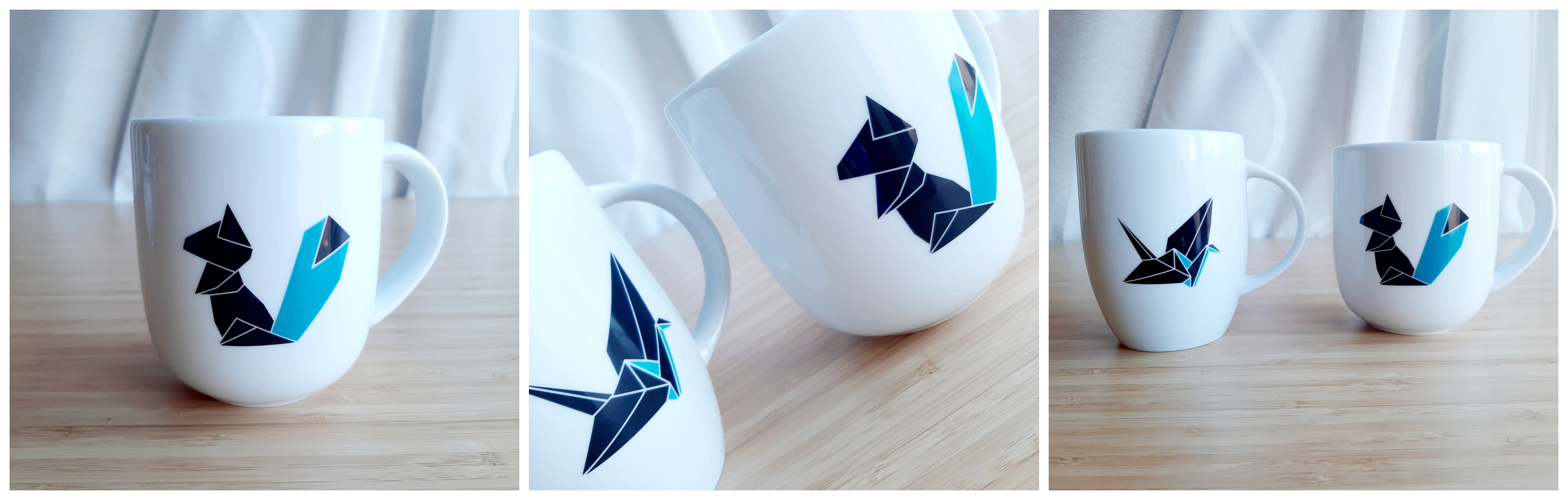
Mug with crane: newly fired; Mug with squirrel: after approx. 100 dishwasher cycles
The motif is not damaged in any way.
How about something special?
Sometimes I combine these techniques. For example, in the Lake Gems collection. First, I hand-paint lotuses, which I fire at 1160 °C. Then I decorate them with decals of koi carp and fire them again, this time at 820 °C.
Or I paint colorful water with glazes and then add a decal with a pen-and-ink drawing of a dragon.

Vintage porcelain and ceramics
Sometimes I discover beautiful historical porcelain in a bazaar and I don't have the heart to leave without it. Most often, these are various decorations such as vases, jars, and similar items. Occasionally, I can't resist a tea set either :). I decorate the products using both of the aforementioned techniques, as well as hobby decorative paints. This is because they don't require such a high firing temperature and therefore cannot damage vintage porcelain in any way.
How can you identify porcelain painted in this way?
The colors have beautiful vibrant shades and sharper edges.
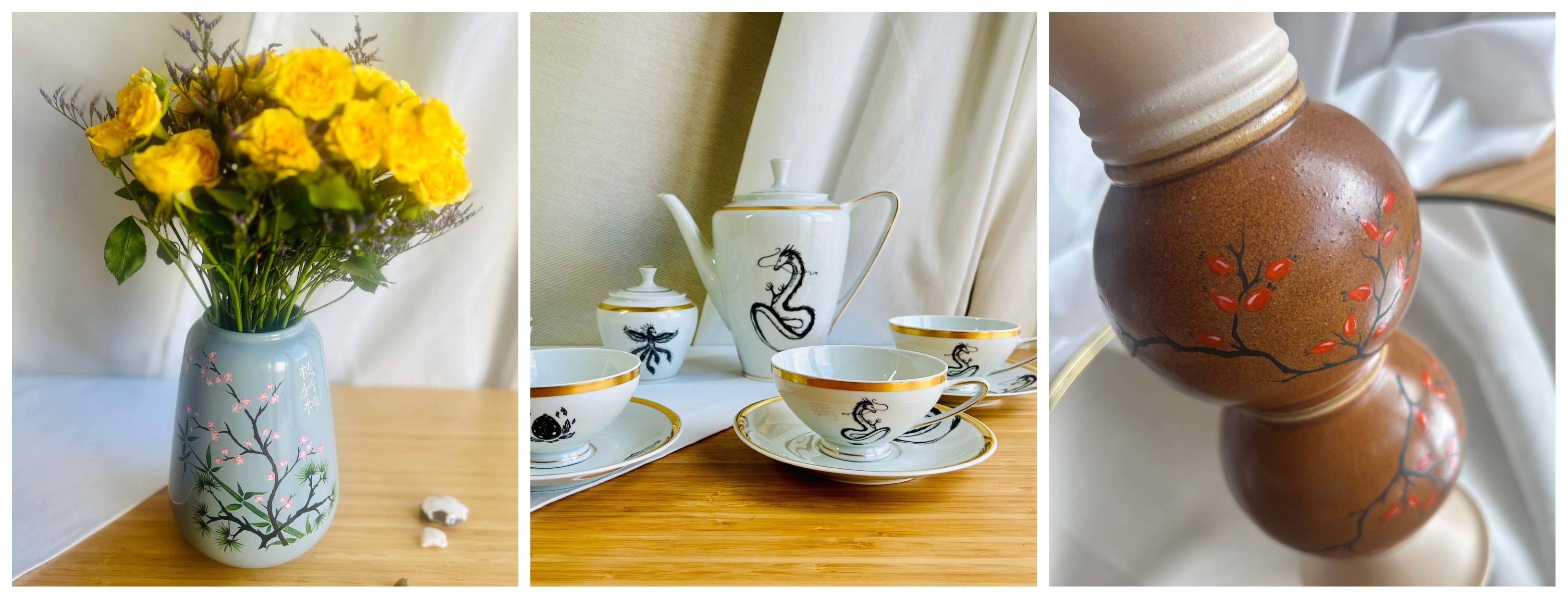
The disadvantage is that products painted in this way cannot go in the dishwasher. You can, of course, wash them by hand, but do not use any abrasive cleaners (not even a scouring pad).
I also have to sell these products only as "DECORATIVE ITEMS" because Czech legislation does not allow such renovated products to be sold as items intended for food contact.